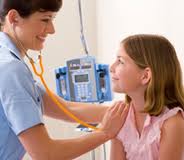
The transformational model of nursing practice

Among the goals that a modern and efficient health must ask what is the transformation of professional values, so that they. In terms of more nurses and coordinators should improve the quality of service so as to maintain or better to increase customer satisfaction and operators. This effort becomes more difficult because of cost constraints and the resources available are limited and strict.

The changes that require a higher priority are:
model that is sensitive to resource constraints, and select patients' needs. there is a two-way link between the rational use of staff and the quality of the service. is crucial to always give more room for creativity and the proposals made by operators. increased decision-making responsibilities of the coordinator, in collaboration with the patient.

The guidelines, procedures and protocols: the role of Nursing Coordinator

All operators, the primary nurse, they are required to follow some essential tools to coordinate action. They are: guidelines , procedures , protocols .

The Guidelines provide recommendations and guidance of clinical behavior whose purpose is to help stakeholders to decide on how best to apply in all circumstances. The guidelines do not restrict freedom of speech, but orient the choice of professionals.

In this context, the role of the coordinator is crucial. In fact, according to their knowledge and experience in the field, he must choose the most appropriate recommendations for each clinical case. They are classified according to five levels of scientific evidence (a, b, c, d, e) and, if it considers that none of these is valid and effective, may decide to edit them or create new ones. This decision is made, usually at the level of team work in which it is inserted. The procedures are internal rules of operation involving the activities of multiple people or functions. For the formalization process we understand a sequence of behaviors, however small, to standardize nursing activity. They are therefore examples of 'objects of Procedure': placement of a catheter indwelling in the adult male, the hygiene of hair in a person undergoing chemotherapy, as well as the interview at the time of nursing care of the client or the distribution of meals in an operational unit.

Even the ISO 9000 certification in health care has given rise to debates about the relationship between procedure and protocol: this is of more general, while the first is that part of the protocol which is used to detail the ways in which nursing takes place a certain action.

There are two types of procedures: those organizational, prepared under the supervision of the quality, and operational, written by professionals involved in the field and made operational by the directors of the department. Those of the second type take into account the legislation, guidelines and / or protocols of scientific societies. There are sometimes related to the procedures work instructions: These are detailed tasks, connected to specific situations. The procedures are approved by an Ipasvi based provincial / national level or through the national association of college of nursing.

The protocol, however, consists of a document that transfers at the level of professional conduct scientific knowledge gained. It is not, therefore, a statement of work, which takes care clinical content. The activity is divided into a sequence of behaviors: the operator remains free in the way in which to perform the individual steps, but this freedom must not compromise the consistency of performance.

The protocol is then encoded nursing course of action to be preferred in providing a given service in a given situation. The protocol can be considered as such only when, in its various components, is able to detail:

the patient's clinical situation for which the protocol can or must be activated;
the problem (or problems) pertaining to nursing that the protocol aims to address and manage and / or, again, the results to be achieved;
actions (which are also known in the literature acts, actions, behaviors, techniques, etc..) and the procedures to be activated;
indicators and standards for the evaluation of effectiveness.

The coordinator shall establish protocols that will be implemented in his department, assisted by a team of his choice. This work is done through the creation of ad hoc working groups, which he supervised, it is essential that the review, and any changes in procedural innovations are implemented with tight deadlines usually monthly.

Coordinator of Nursing

The coordinator is a professional nursing organization and material resources, both human ones, which coordinates, a business unit within a department or hospital, nursing all the figures.

Contributes to achieving organizational goals through a help function and stimulation of the members of his team, responds to the area coordinator and director of nursing. Collaborate in the drafting of guidelines, procedures and protocols. It combines professional management skills, leadership, and nursing skills.

The figure has become highly specialized with the Law February 17, 2006, No. 43. This law states that to become a nurse coordinator should have the following characteristics:

Master's degree in management for the coordination functions in the membership; at least three years experience in the membership profile. Is again recognized the valid certificate of competency to an executive position in nursing (courses for ex-nurse). Currently however, is not recognized the Master of Science in Nursing and Midwifery as the title to access the role.

Functions of the nursing coordinator
Guidelines (2001) provide training in the nursing coordinator for the acquisition of skills, as well as the promotion of lifelong learning and planning, even the direct management of training activities. The capacity to be developed include the identification of own training needs and those of his collaborators, the design and evaluation of training and testing the impact of training activities. The same Federation , in 2007, said that between the technical and professional skills that define the profile you are the Nurse Coordinator for the design, delivery and monitoring of training programs.

The nursing coordinator responds to the area coordinator and director of nursing.

Clinical Nurse Specialist

The Clinical Nurse Specialist (ISC) is an advanced practice nurse with a postgraduate training (clinical masters). The ISC is the expert clinician in the assessment and care planning area of ​​expertise, has a thorough knowledge of diagnostic and treatment of their patients, is able to develop their interventions according to the most recent indications of ' Evidence-based nursing . The ISC works with other nurses , encouraging growth and maintenance of nursing practice, to improve outcomes of patient care and build new care strategies.

Another Way To Control Weight

Overweight and obesity are big headache for health experts around the world as these 2 conditions will likely raise a person’s risk of getting diabetes, high cholesterol, hypertension (high blood pressure), and eventually lead to heart disease or stroke. The medical cost involved can be a heavy burden for the governments.

In order to control body weight, one should watch the amount of food he or she eats. Numerous studies have looked at how the portion size can affect on the amount people eat. A new study, conducted by researchers from University of Utah, Salt Lake City, examined at how the bite size will influence the quantities ingested.

In their paper published in July 2011 in the ‘Journal of Consumer Research’, they argued that bigger bites lead to eating less, but only in restaurant settings.

The study was carried out in a popular Italian restaurant in the South-Western United States. 2 sizes of forks were used to manipulate bite sizes: a larger fork that held 20 percent more food than the fork usually used in the restaurant, and a smaller fork that held 20 percent less than the usual one. It was found that diners who used large forks ate less than those who used small forks.

Tables were furnished with either large fork or small fork over 2 lunches and 2 dinners in the restaurant. Servers, including one of the study's researchers, took customers' orders, and weighed the full plate of food that they had ordered before serving it to them.

Each plate was attached with a small sticky note written with details including weight and other information. At the end of the meal, every plate was brought back to the kitchen and weighed again. The results showed that diners who used the bigger fork ate less food than those who used the smaller fork.

Such theory, however, only worked in a restaurant setting. In another study conducted in the laboratory using also Italian food, researchers found that people who used big forks actually eat more. Hence, the study concluded that there are different motivations when people eat in a restaurant or a laboratory.

If you wish to control the amount you eat, perhaps you should ask for or simply bring along a big fork the next time you visit an Italian restaurant!

Can Olive Oil Prevent Stroke?

Olive oil is known to benefit heart disease patients.

Some clinical trials have found that Mediterranean diet, with olive oil as key ingredient, helps control some risk factors for heart disease, including high blood pressure, abdominal obesity and elevated levels of LDL (bad) cholesterol. Besides olive oil, Mediterranean diet also includes plenty of fruits and vegetables, whole grains, fish and moderate amounts of red wine. High olive oil intake is also linked to a lower risk of heart attack, and a longer lifespan among heart attack patients.

Recently, researchers from the National Institute of Health and Medical Research in Bordeaux, France even suggested that older people who ate olive oil have a lower risk of stroke than those who did not. Their paper was published on June 15, 2011 in ‘Neurology’, the medical journal of the American Academy of Neurology.

They followed 7,625 French people who aged 65 and above from 3 cities (Bordeaux, Dijon and Montpellier) for a period of 5 years. The participants were divided into groups according to their use of olive oil, ranging from people who did not use it at all to those who used it in dressing, cooking and on bread (classified as ‘intensive’).

During the period of study, there were 148 strokes. Those intensive users suffered stroke at a rate of 0.3 percent per year, comparing with just over 0.5 percent among non-users and 0.4 percent among moderate users.

After adjusting for factors like body weight, physical activity and overall diet, the risk of stroke for ‘intensive’ olive oil users were found to have 41 percent lower than that of those who never ate olive oil.

Based on the findings, it seemed that a new set of dietary recommendation should be issued to prevent stroke in people who are 65 and above. Olive oil can be an inexpensive and easy way to help older people prevent from getting stroke.

People should choose olive oil and other unsaturated fats over saturated fats that are found largely in meats and dairy and trans fats that were found in some processed foods such as crackers, cookies and chips.

Would Meditation Help Heart Disease Patients?

Any practice in which the practitioner trains his or her minds or self-induces a mode of consciousness can be called meditation. As it is generally an inwardly oriented, personal practice, people can usually practice it by themselves. While meditation has been practiced since thousands of years ago for various reasons, it is now commonly used for relaxation and stress reduction.

Since 1960s, meditation has been the subject of scientific research. There were more than 1,000 published studies that linked various methods of meditation to changes in bodily processes including metabolism, blood pressure, and brain activation.

Meanwhile, popularity of meditation has grown steadily. A 2007 study by the United States government found that about 9.4 percent of adults (over 20 million) had practiced meditation within the past 12 years, up from 7.6 percent (more than 15 million people) in 2002.

In a paper published on June 27, 2011 in the ‘Archives of Internal Medicine’, researchers from the Institute for Natural Medicine and Prevention at Maharishi University of Management in Fairfield, Iowa reported that meditation would cut the rate of death, heart attack and stroke by half.

The 9-year study on the effects of meditation of heart disease patients was funded by the National Institute of Health, and the stress-reducing technique used is Transcendental Meditation.

Trial was conducted at the Medical College of Wisconsin in Milwaukee in collaboration with Schneider’s Institute. The study tracked 201 African American men and women, with an average age of 59. These participants had narrowing of arteries in their hearts. While staying on the prescribed medications, they were randomly assigned to either a meditation group or a control group that was given conventional health education classes.

A comparison of results from the 2 groups showed that those who practiced Transcendental Meditation had the risk of death, nonfatal heart attack and stroke decreased by 47 percent. Significant drops in blood pressure, stress and anger found among people in the meditation group might help explain the results.

Researchers felt that more studies should be carried out to confirm the results. They also pointed out that meditation should not be a substitute for drug therapy for heart disease patients.

The study, nevertheless, highlights a hope that health conditions of heart disease patients could be improve if these patients are taught how to effectively reduce psychosocial stress.
 
Support : Creating Website | SEO Template | Free Template
Copyright © 2011. Heart Disease Symptoms - All Rights Reserved
Proudly powered by Blogger